Every school morning used to be a scramble. Shoes missing, lunch not packed, teeth not brushed, and everyone running late. These six products turned our morning routine from chaos into something our kids actually manage on their own. None of them are complicated. They just give kids a visual system to follow so they stop waiting for you to tell them what comes next.
As an Amazon Associate I earn from qualifying purchases.
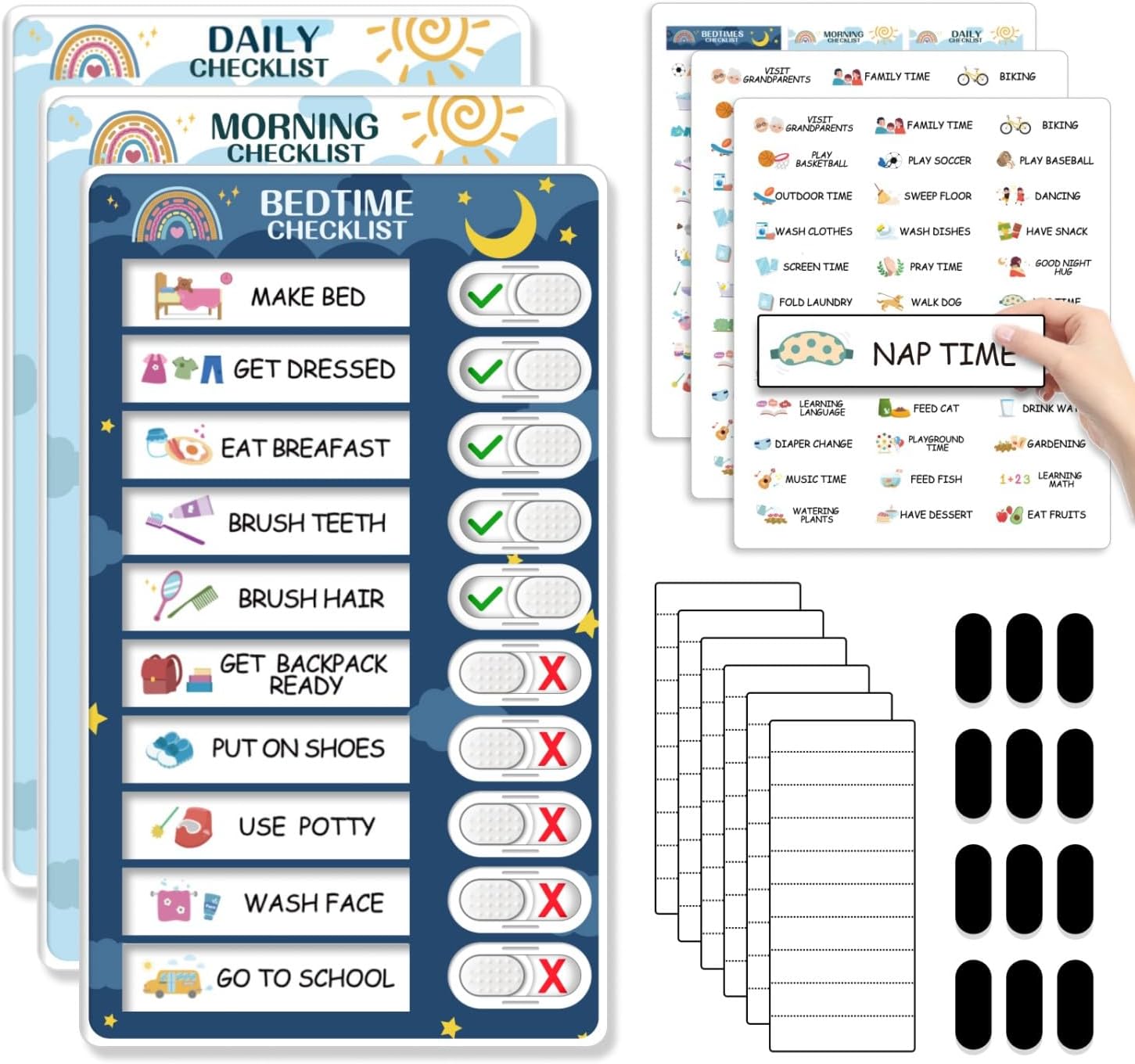
We printed checklists before and they lasted about a day. This chart uses illustrated cards with Velcro backing that kids physically move from the “to do” side to the “done” side. The act of moving the card turns out to be the key. Our son treats it like a game and races to move all his cards before his sister. It covers getting dressed, brushing teeth, eating breakfast, packing a bag, and putting on shoes. You can customize the cards or rearrange the order. We added a “feed the cat” card and it stuck instantly.
- ✅ Pros
- Velcro cards make the routine feel like a game
- Customizable, you can add or rearrange tasks easily
- Illustrated cards work for pre-readers too
- ❌ Cons
- Velcro adhesive can weaken on textured walls
- Smaller kids may need a couple weeks to build the habit
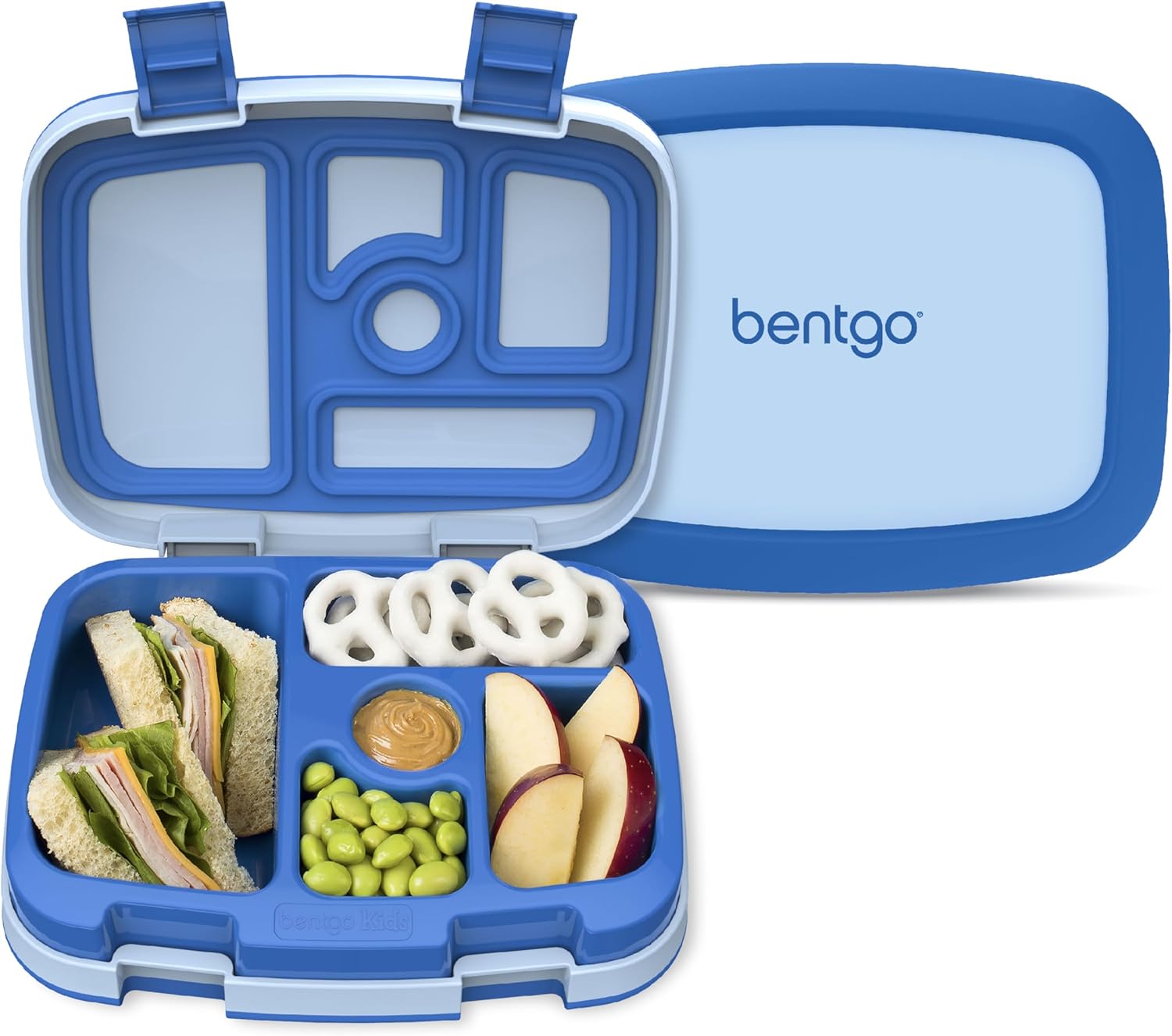
The reason our kids never opened their old lunch containers at school was because the latches were too stiff. These have a simple push-tab design that a four-year-old can open without help. Five compartments keep food separated (no soggy crackers from touching fruit), and the lid seals tight enough that applesauce does not leak in a backpack. We let the kids pack their own lunch the night before using the compartments as a guide: one protein, one fruit, one veggie, one snack, one treat. It teaches them to build balanced meals without a lecture.
- ✅ Pros
- Push-tab design is easy for kids age 4+ to open solo
- Five compartments prevent soggy food mixing
- Teaches kids to build balanced meals independently
- ❌ Cons
- Not microwave safe, so leftovers need to be eaten cold
- Compartments are fixed sizes, cannot accommodate larger items
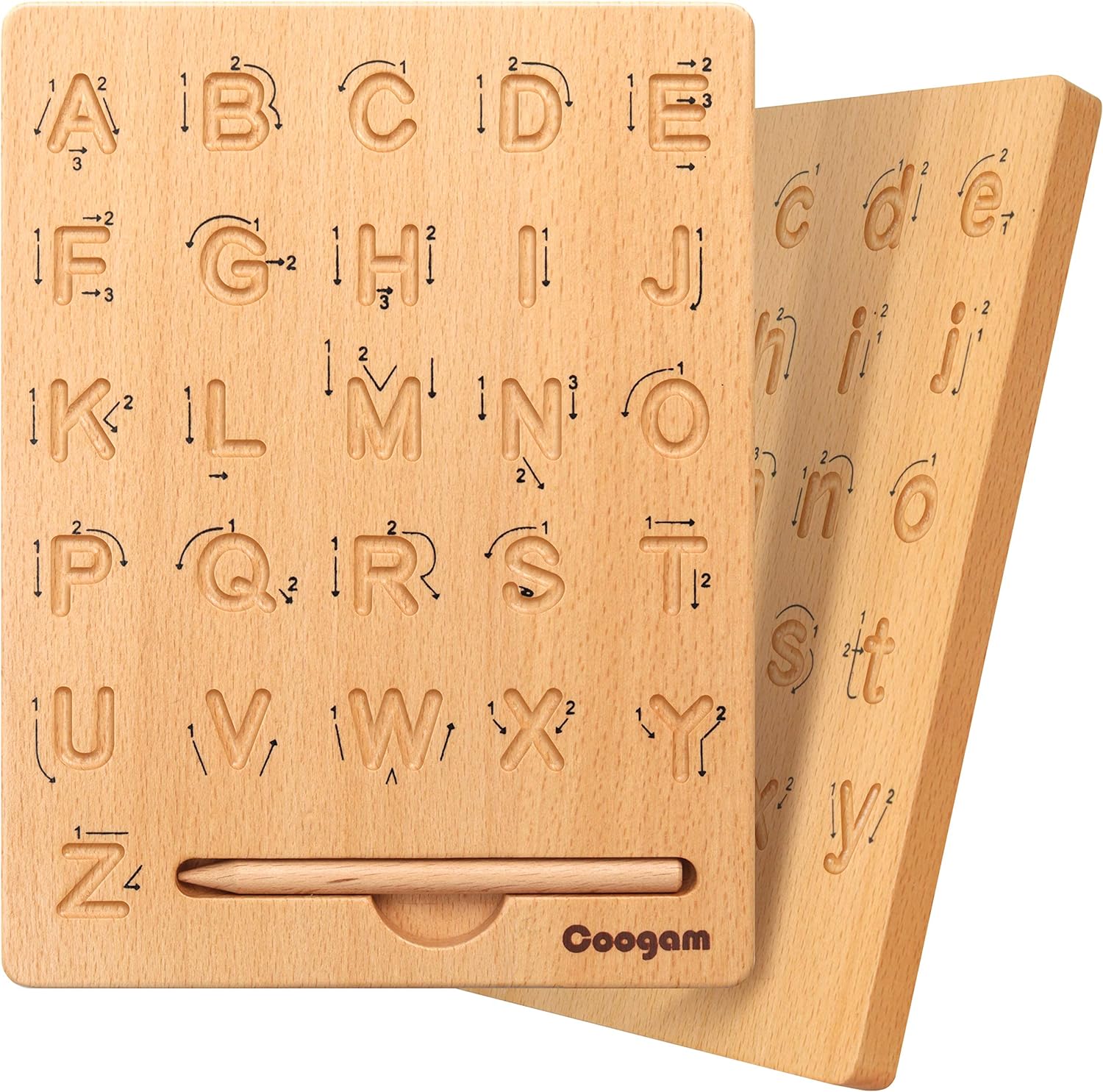
Our daughter was going through a stack of tracing worksheets every week. This wooden board has grooved letters that she traces with a stylus pen, and it resets every time. No paper waste, no searching for the right printable, no dried-out markers. The grooves guide the pen so the motion becomes muscle memory. She moved from tracing uppercase to lowercase in about three weeks. The board is double-sided: letters on one side, numbers on the other. We keep it in the car for waiting rooms and it holds up to being tossed in a bag daily.
- ✅ Pros
- Reusable, no paper waste or dried-out markers
- Grooved letters build muscle memory for handwriting
- Double-sided with letters and numbers
- ❌ Cons
- Stylus tip can wear down after a few months of heavy use
- Only covers print letters, not cursive
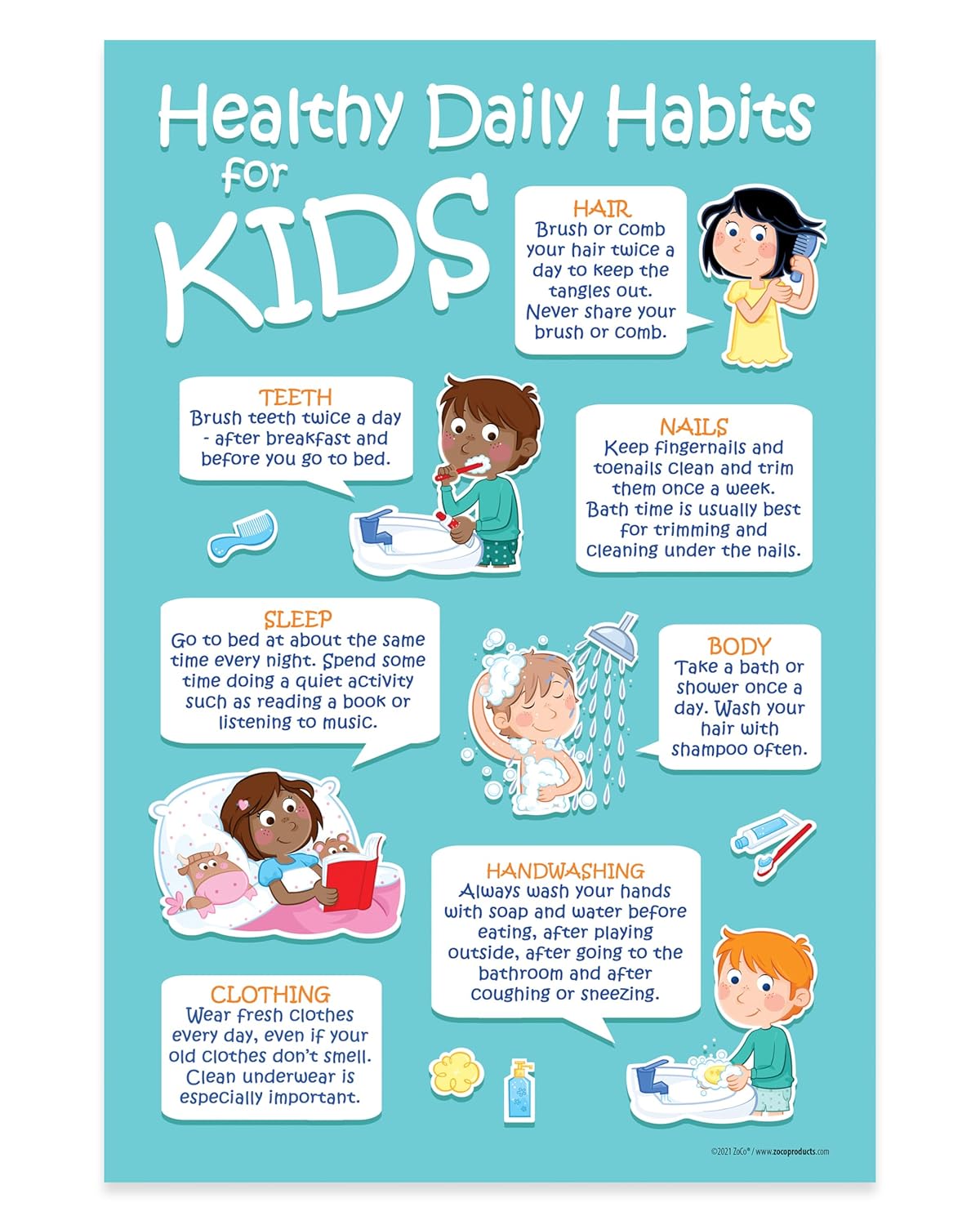
This chart focuses on the personal care tasks that kids forget unless you remind them eight times: washing hands, brushing teeth, combing hair, washing face. Like the morning routine chart, it uses movable pieces so kids track their own progress. We hung it at kid height in the bathroom and within a week our son was going through his routine without being asked. The illustrations are clear enough for a three-year-old and the chart is laminated so it handles bathroom humidity without warping. It made bedtime hygiene about 80% less stressful.
- ✅ Pros
- Movable pieces let kids track their own hygiene progress
- Laminated surface handles bathroom humidity
- Illustrations work for pre-readers, no text needed
- ❌ Cons
- Limited to hygiene tasks, does not cover full daily routine
- Suction cup mount may not stick to all tile types
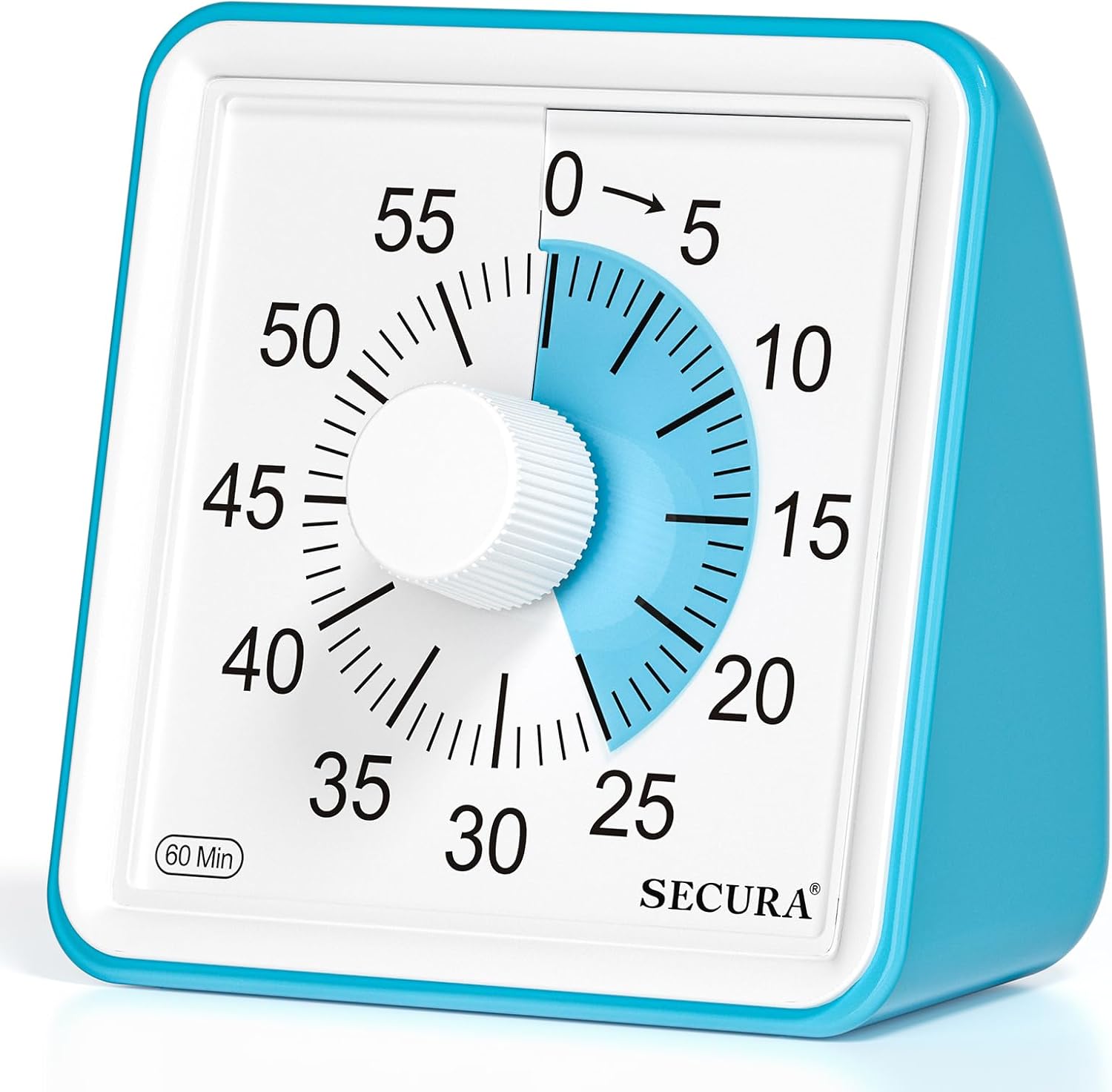
Telling a five-year-old “you have ten minutes” means nothing to them. This timer shows time as a colored section that shrinks as minutes pass. When the color is gone, time is up. It changed transitions completely. Getting dressed has a ten-minute timer. Screen time ends when the red disappears. Leaving for school starts when the timer hits zero. No arguments, because the timer is the authority, not you. It runs silently (no ticking) and has an optional alarm that is gentle enough not to startle. We have two now, one for upstairs and one for the kitchen.
- ✅ Pros
- Visual countdown is intuitive even for toddlers
- Silent operation with a gentle optional alarm
- Removes parent from being the “bad guy” enforcing time limits
- ❌ Cons
- Requires AA batteries, no rechargeable option
- The colored disc can be hard to read from across the room
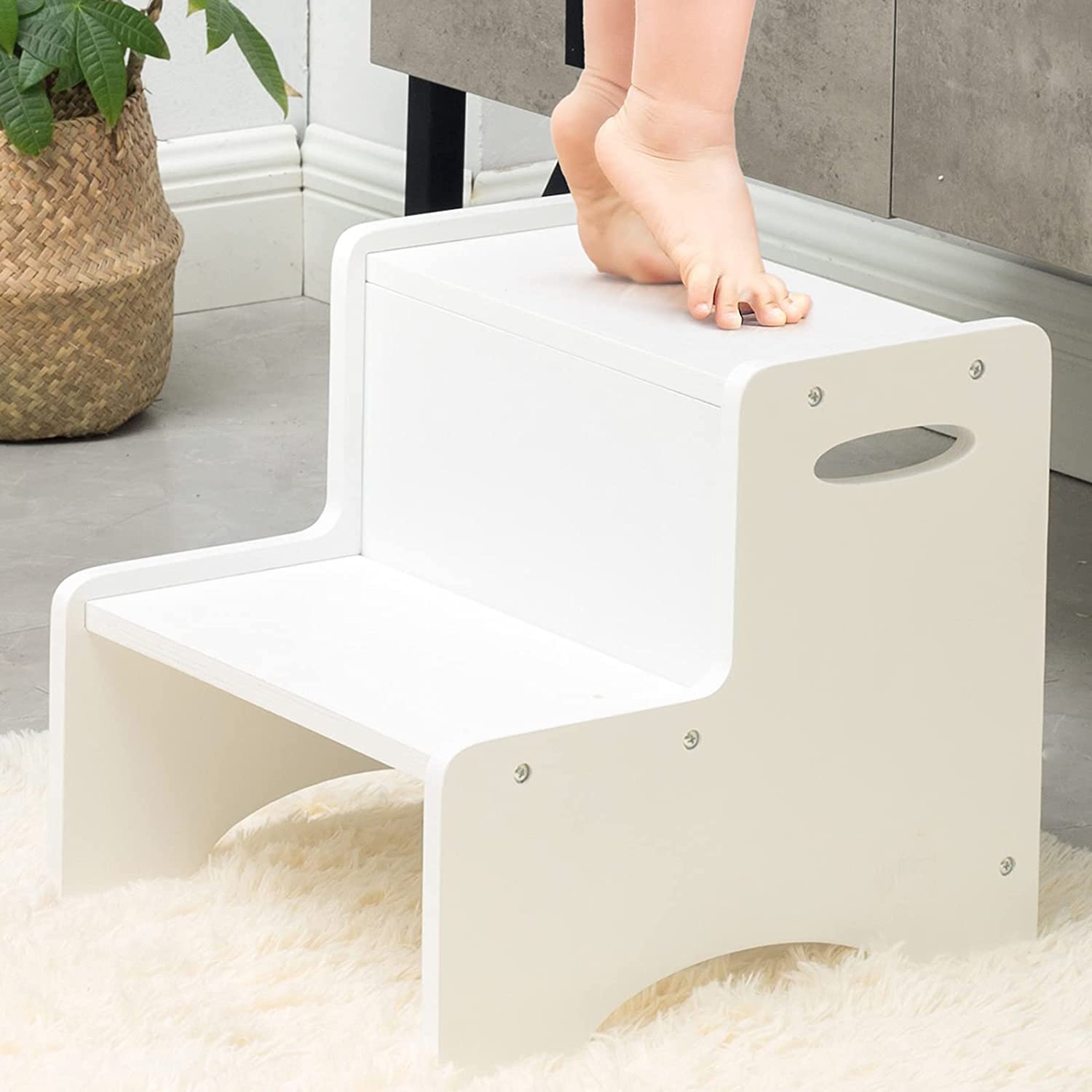
This stool lives in the bathroom but travels to the kitchen and closet as needed. It is lightweight enough that a three-year-old can carry it, but sturdy enough to hold an adult if you step on it while reaching for something high. The non-slip top and rubber feet mean no sliding on tile, which was our biggest worry. Our kids use it to reach the sink for teeth brushing, the kitchen counter for snack prep, and the closet rod for picking their own clothes. It was the missing piece in making them independent for all the daily tasks that require being just a little taller.
- ✅ Pros
- Lightweight enough for a 3-year-old to carry independently
- Non-slip top and rubber feet prevent sliding on tile
- Supports adult weight, so it doubles as a household step stool
- ❌ Cons
- Single step may not be tall enough for high counters
- Plastic construction feels less premium than wooden options